
Published: 2026-09-17T12:13:05
Modified: 2026-08-14T12:22:41
Displayed: Thursday 17th September 2026
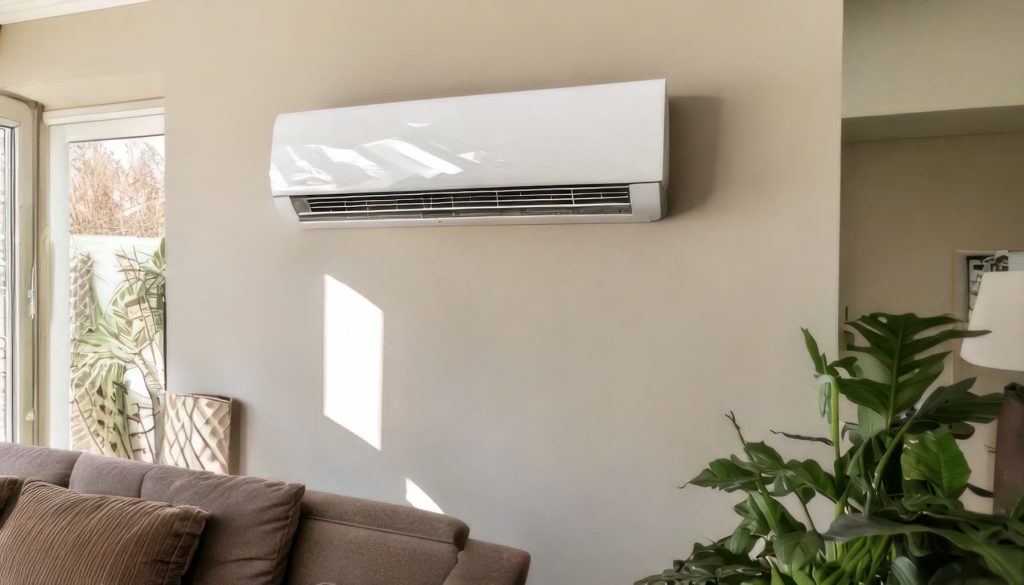
How many air conditioning units do I need? It is a common question for homeowners considering air conditioning in more than one room.
If you only want to cool a single bedroom or home office, the answer may be relatively straightforward. However, if you want air conditioning across several bedrooms, an open-plan living area or multiple floors, the right solution requires more careful planning.
You do not necessarily need one completely separate air conditioning system for every room. Modern residential systems can be configured in different ways, including single-split and multi-split arrangements.
For homeowners across Surrey, including Reigate, Redhill, Caterham, Guildford, Leatherhead and Epsom, understanding these options can help you plan an air conditioning system that suits how you actually use your home.
The answer to how many air conditioning units do I need depends primarily on the number and type of rooms you want to control.
Air conditioning does not normally work like traditional central heating, where one radiator system serves the entire property. Instead, residential air conditioning is often designed around individual rooms or zones.
You may therefore require air conditioning for:
Each property should be assessed individually before deciding how many indoor units and outdoor units are appropriate.
In many cases, each separately controlled room will have its own indoor air conditioning unit.
This allows individual temperature control.
For example, if you want air conditioning in three bedrooms, you may have three indoor units so that each room can be controlled independently.
However, that does not necessarily mean you need three outdoor units.
A multi-split system can potentially connect several indoor units to one outdoor unit.
This can provide a more integrated solution for homes where several rooms require air conditioning.
A single-split system typically consists of one indoor unit connected to one outdoor unit.
This is a common solution when air conditioning is only required in one room.
Examples include:
If you are asking how many air conditioning units do I need because one particular room becomes uncomfortable, a single-split system may be all that is required.
The equipment should still be correctly sized according to the characteristics of the room.
A multi-split air conditioning system allows multiple indoor units to connect to an outdoor system.
This can be useful when several rooms within the property require independent temperature control.
For example, a homeowner might want air conditioning in:
Rather than approaching these as completely unrelated installations, a multi-room solution can be considered.
Each indoor unit can serve its designated room, while the overall system is designed as part of one installation.
The appropriate configuration depends on the property and equipment selected.
Neither configuration is automatically better.
The right choice depends on what you want to achieve.
A single-split system may make sense when:
A multi-split arrangement may be worth considering when:
A professional site assessment can determine which configuration is more appropriate.
This is where homeowners need to distinguish between an indoor unit and the wider air conditioning system.
An indoor unit is normally intended to control the room or area where it is installed.
Leaving doors open and expecting one bedroom unit to effectively cool several separate rooms is unlikely to provide the same level of temperature control as a properly designed multi-room system.
Air needs to circulate effectively throughout the space.
If rooms are separated by walls, hallways and doors, individual indoor units may provide much better control.
For large open-plan spaces, however, the requirements can be different because several areas may effectively form one connected room.
If you want independent air conditioning in three separate bedrooms, you may require an indoor unit for each room.
That does not necessarily mean three completely independent systems.
Depending on the property, equipment and installation requirements, a multi-split configuration may allow the bedrooms to form part of one wider system.
The advantage of individual indoor units is that each bedroom can have its own temperature settings.
This is particularly useful when rooms are occupied at different times or occupants have different temperature preferences.
Some homeowners find that the ground floor of their property remains relatively comfortable while upstairs bedrooms become significantly warmer.
In this situation, it may not be necessary to install air conditioning throughout the entire house.
Instead, the system can be designed specifically around the upper floor.
For example, you might choose air conditioning for:
This targeted approach is one reason the answer to how many air conditioning units do I need should be based on your actual comfort requirements rather than the overall size of your home.
Large open-plan spaces require a different approach.
A kitchen, dining area and living room may form one connected space without internal walls.
In this situation, the cooling requirement should be calculated for the overall area.
An installer will consider factors including:
Depending on the size and layout, one appropriately specified system may be sufficient, or a different configuration may be recommended.
Simply counting rooms is therefore not enough.
Room size affects the required capacity of the air conditioning system, but it does not independently determine how many units you need.
Two small separate bedrooms may each require their own indoor unit because they are independent spaces.
One much larger open-plan room may potentially be served differently because it is one connected area.
The installer therefore needs to consider both:
Capacity: how much heating or cooling the space requires.
Zoning: which rooms need independent temperature control.
Both are important when designing residential air conditioning.
No.
One of the advantages of home air conditioning is that you can target the rooms where temperature control is most valuable.
Many homeowners prioritise:
If your kitchen remains comfortable but your bedroom regularly overheats, there may be little reason to install air conditioning in both.
A targeted system can focus investment on the spaces where it provides the greatest benefit.
If you already know that several rooms will eventually require air conditioning, it can be useful to discuss the complete plan before beginning installation.
This does not necessarily mean every indoor unit must be installed immediately.
However, understanding the longer-term objective can help when considering:
Planning ahead may help avoid designing the first installation without considering what you might want later.
Potentially, although this depends on how the original system has been configured.
If future expansion is likely, it is worth discussing this with your installer at the beginning.
A system designed exclusively for one room may have different expansion possibilities from a wider multi-room configuration.
This is particularly relevant for homeowners renovating a property gradually or planning future loft conversions and extensions.
With an appropriately designed multi-room system, individual indoor units can typically provide separate control for their respective areas.
This is one of the main advantages of zoned residential air conditioning.
You may want the main bedroom cooler while another room is not being used at all.
Independent control allows you to manage rooms according to their actual requirements rather than applying one temperature throughout the property.
Many modern systems can provide heating as well as cooling.
This means a multi-room installation can potentially provide individual climate control throughout different seasons.
For example, you might use heating in a home office during the day without needing to change the temperature in unused bedrooms.
During summer, the same equipment can provide cooling.
This year-round flexibility is an important consideration when deciding how many air conditioning units do I need and which rooms should be included.
A detached garden room will usually need to be considered separately from rooms inside the main house.
Because it is physically separated from the property, the installation requirements can be different.
Garden rooms are particularly suited to heating and cooling systems because they can become very warm during summer and cold during winter.
If you have air conditioning inside the main house and also want climate control in a garden office, your installer can assess how best to approach the different spaces.
Outdoor equipment is an important part of planning multi-room air conditioning.
If several indoor units are required, your installer needs to determine an appropriate configuration and suitable outdoor equipment location.
Factors include:
This is one reason multi-room air conditioning should be designed as a complete system rather than simply selecting indoor units room by room.
The cost depends on the number of rooms, equipment and installation requirements.
Factors can include:
A two-room system will have different requirements from a five-room installation.
The most reliable way to determine cost is therefore to arrange a property assessment and receive a quotation based on the system you actually need.
If you’re asking how many air conditioning units do I need, a site survey can provide a much more useful answer than a generic online calculation.
Kinnear AC can assess:
From there, an appropriate system configuration can be recommended.
Kinnear AC provides residential air conditioning solutions throughout Surrey, including Guildford, Leatherhead, Reigate, Redhill, Caterham and Epsom.
Whether you need air conditioning for one bedroom or want to create independent temperature control across several rooms, our engineers can assess the property and recommend an appropriate configuration.
You don’t necessarily need to air condition every room.
The objective is to identify where temperature control will provide the greatest benefit and design the system around those spaces.
It depends on which rooms you want to control. If all three bedrooms require independent cooling, each may require an indoor unit. However, the overall system configuration should be assessed professionally.
Generally, a single indoor unit is designed to condition the room or connected area where it is installed. Separate rooms may require individual indoor units for effective temperature control.
Not necessarily. Multi-split systems can allow multiple indoor units to connect to outdoor equipment, depending on the system design.
Yes. If upper-floor bedrooms are the main areas experiencing overheating, the installation can focus specifically on those rooms.
Potentially. If future expansion is likely, tell your installer before the initial system is designed so this can be considered.
With an appropriately designed multi-room system, separate indoor units can provide individual temperature control for different rooms.
Running costs depend on system efficiency, number of rooms being used, property characteristics, temperature settings and how frequently the equipment operates.
Ultimately, the answer to how many air conditioning units do I need depends on how many separate areas of your home require independent temperature control.
One overheated bedroom may only require a single-room system. Three bedrooms may benefit from multiple indoor units. A large open-plan space may require a different solution entirely.
The most effective approach is to design the system around the property rather than simply counting rooms.
Kinnear AC provides tailored residential air conditioning throughout Guildford, Leatherhead, Reigate, Redhill, Caterham, Epsom and surrounding Surrey areas.
Contact Kinnear AC to arrange a site survey and determine the right air conditioning configuration for your home.

We use cookies to provide the best experience.